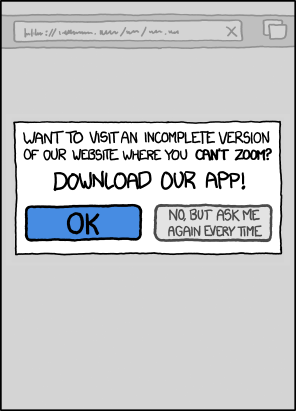
XKCD nailed it again. I can’t tell you how many times I’ve seen this and it’s always the same. I think the most guilty of this has to be LinkedIn. They constantly send emails and then load the “touch” version of their site (which I have to say, takes about 1 full minute to load) [...]
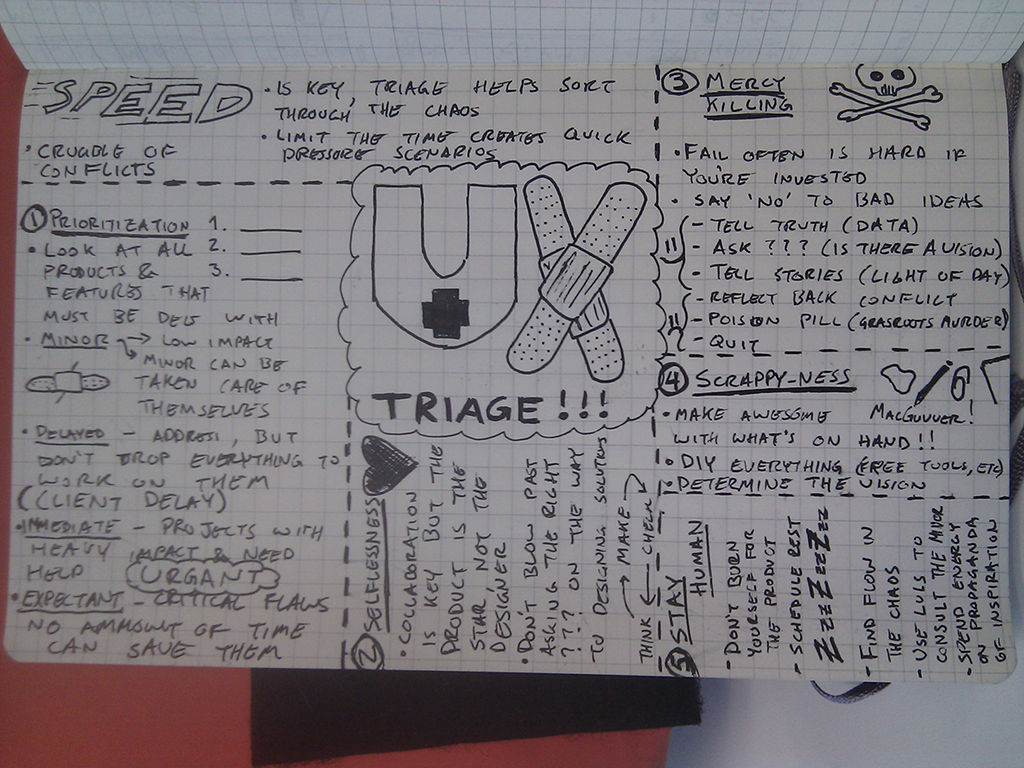
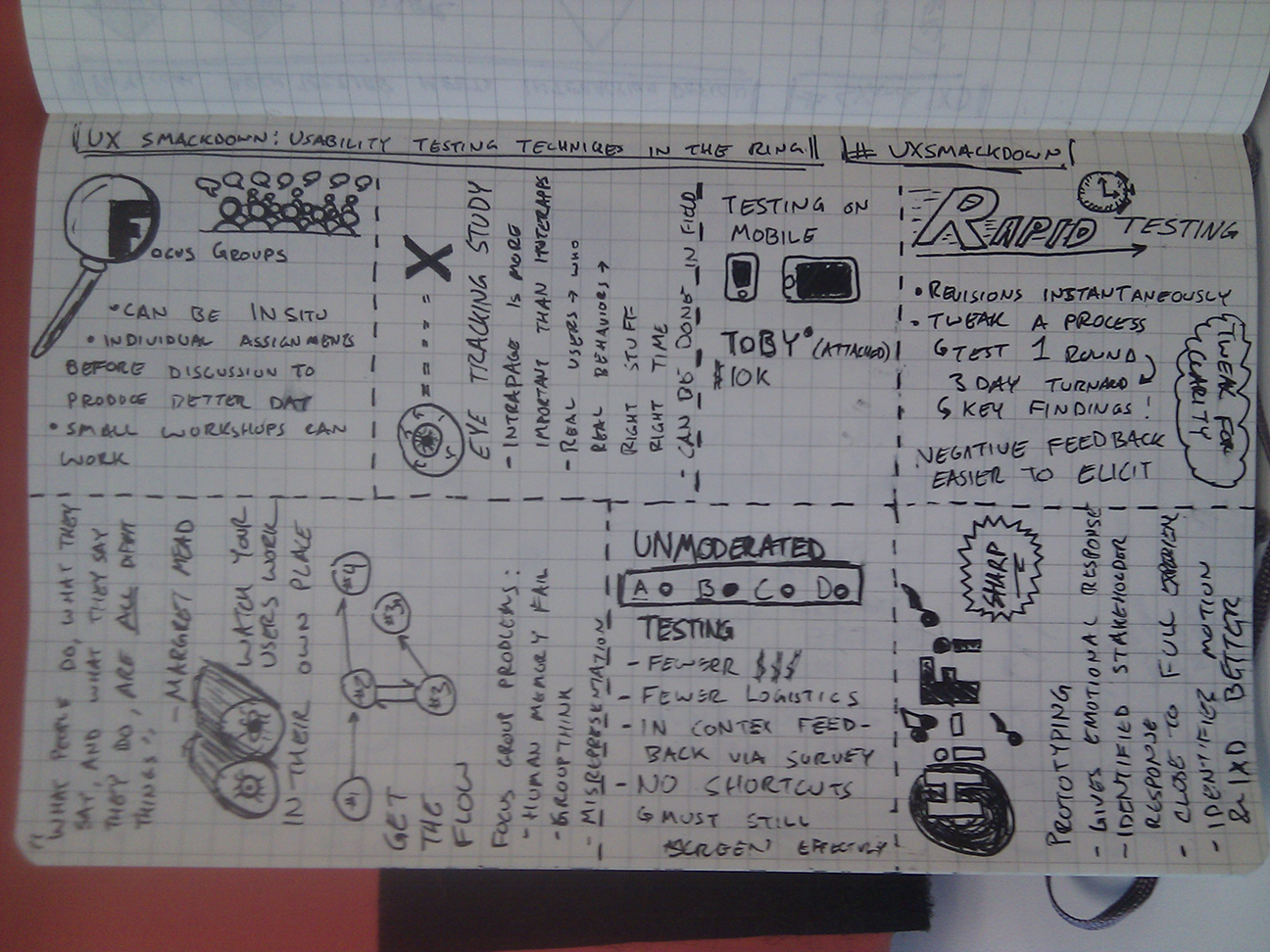
Speed is key. Triage helps sort order in chaos and the time limit creates a scenario where there is lots of pressure. First is Prioritization – look at all the products and features that must be dealt with and rank them. Minor Problems are low impact and can often be taken care of them by [...]
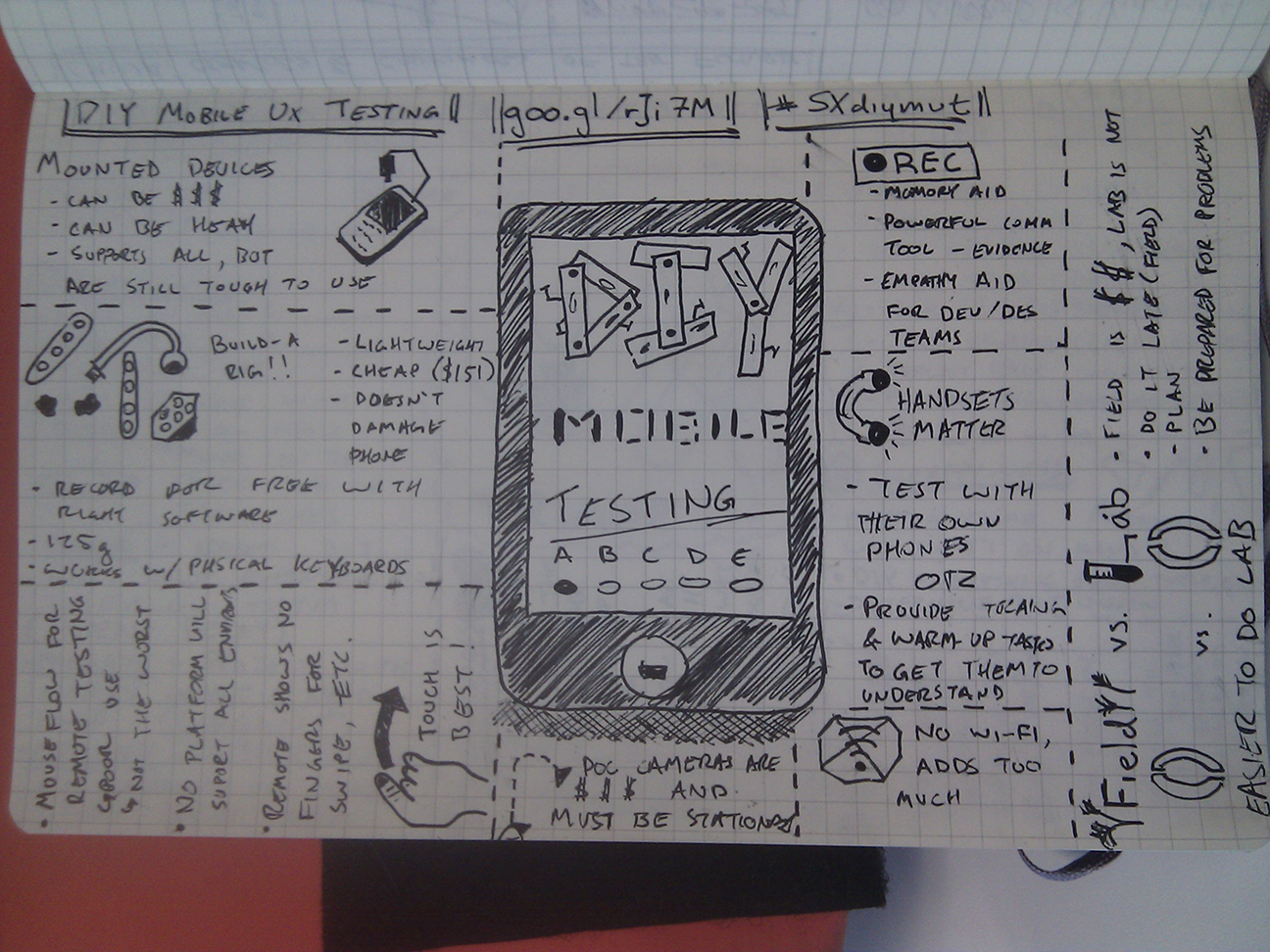
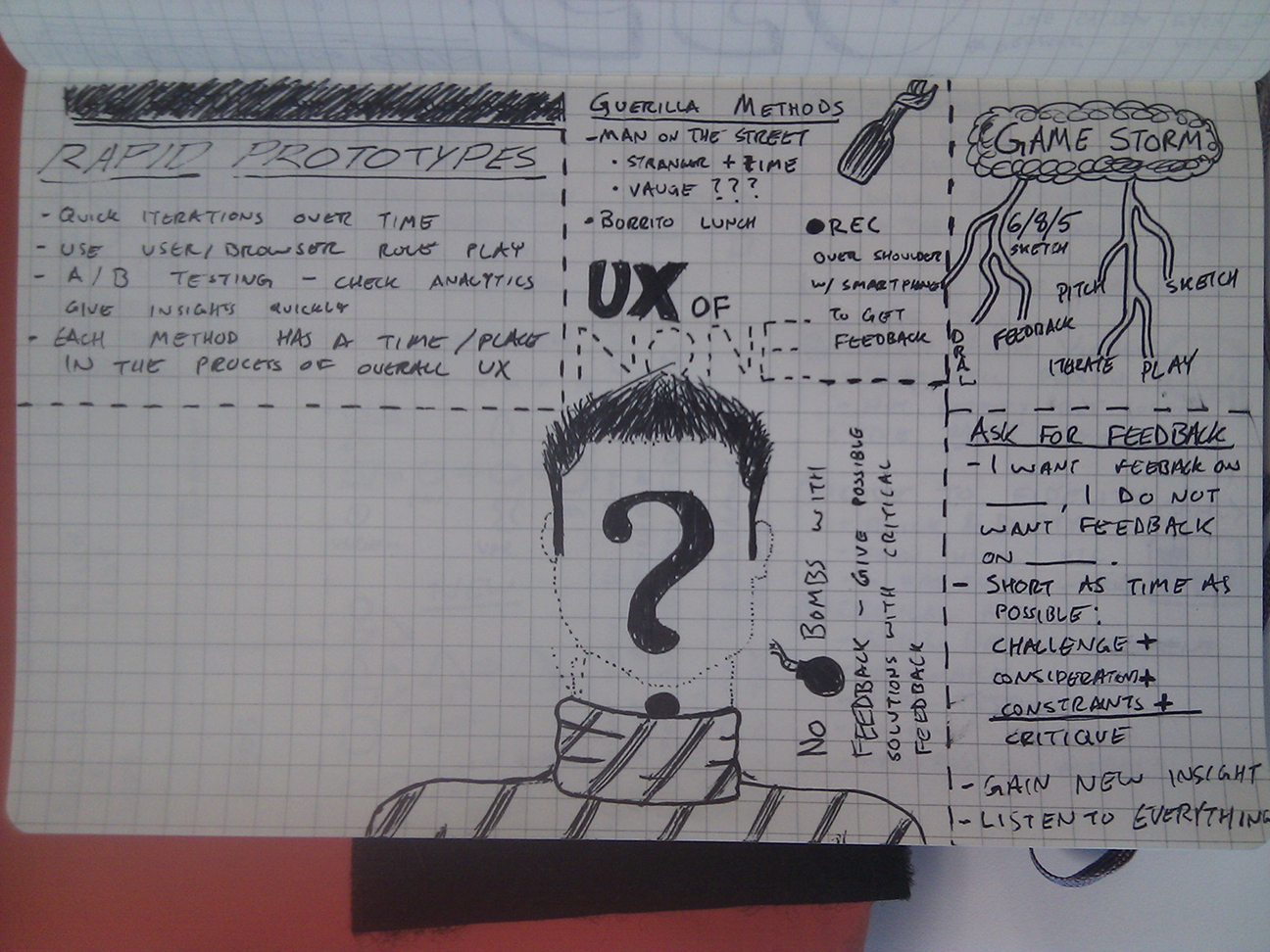
It’s important to record testing – it serves both as memory aid for the tester as well as a powerful tool (evidence) for clients and stakeholders. I can also serve as an empathy aid for dev and design teams. Handsets matter. Users want to test to test with their own phones. If that’s not possible, [...]
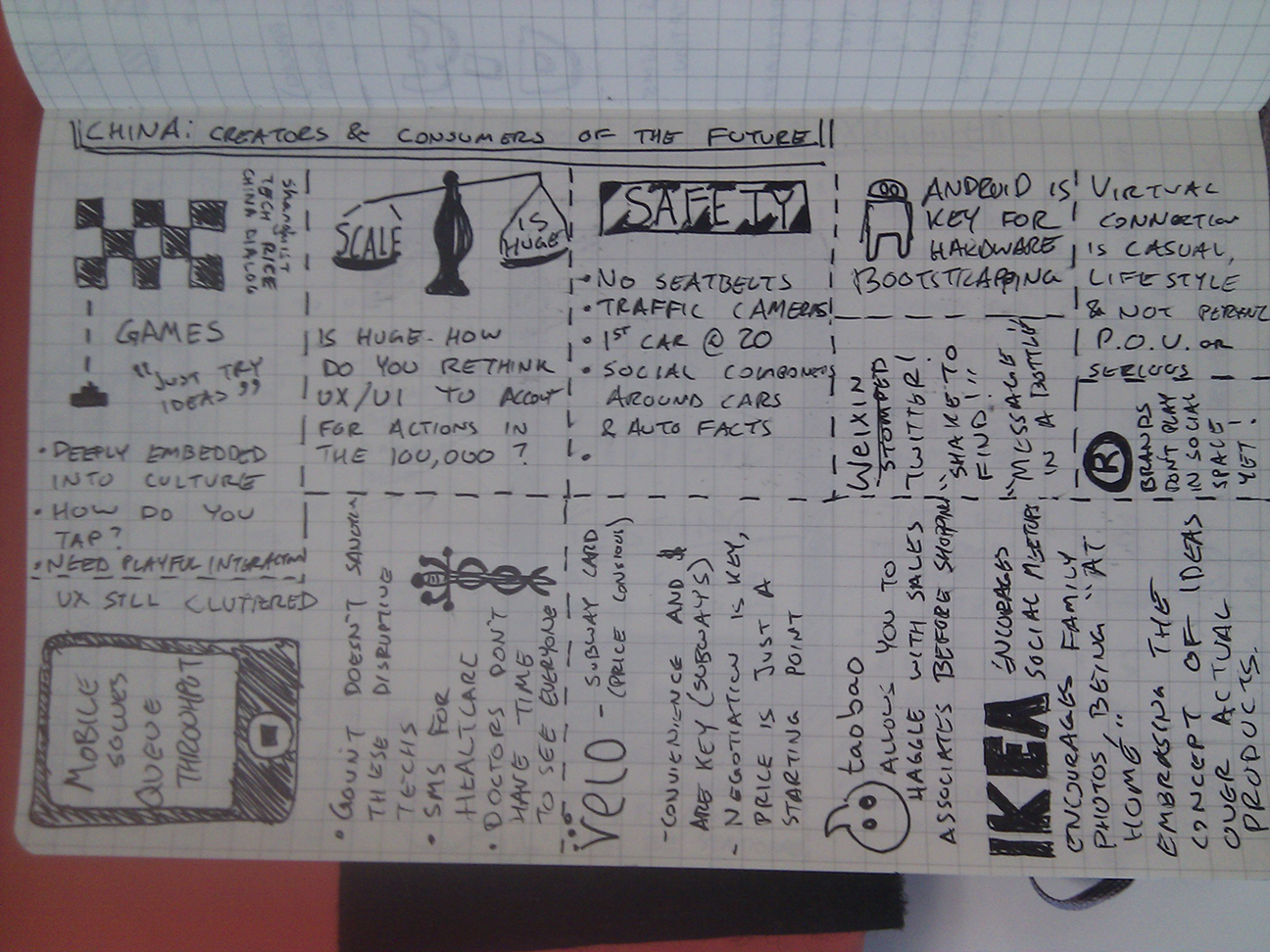
Games are deeply embedded into Chinese culture, so playful interaction is needed to entice more users. How do you tap into a culture of competition. Scale is Huge – How do you rethink your UI/UX to account for actions in the hundreds of thousands? Safety is of huge concern in China. Seatbelts, however, are rarely [...]
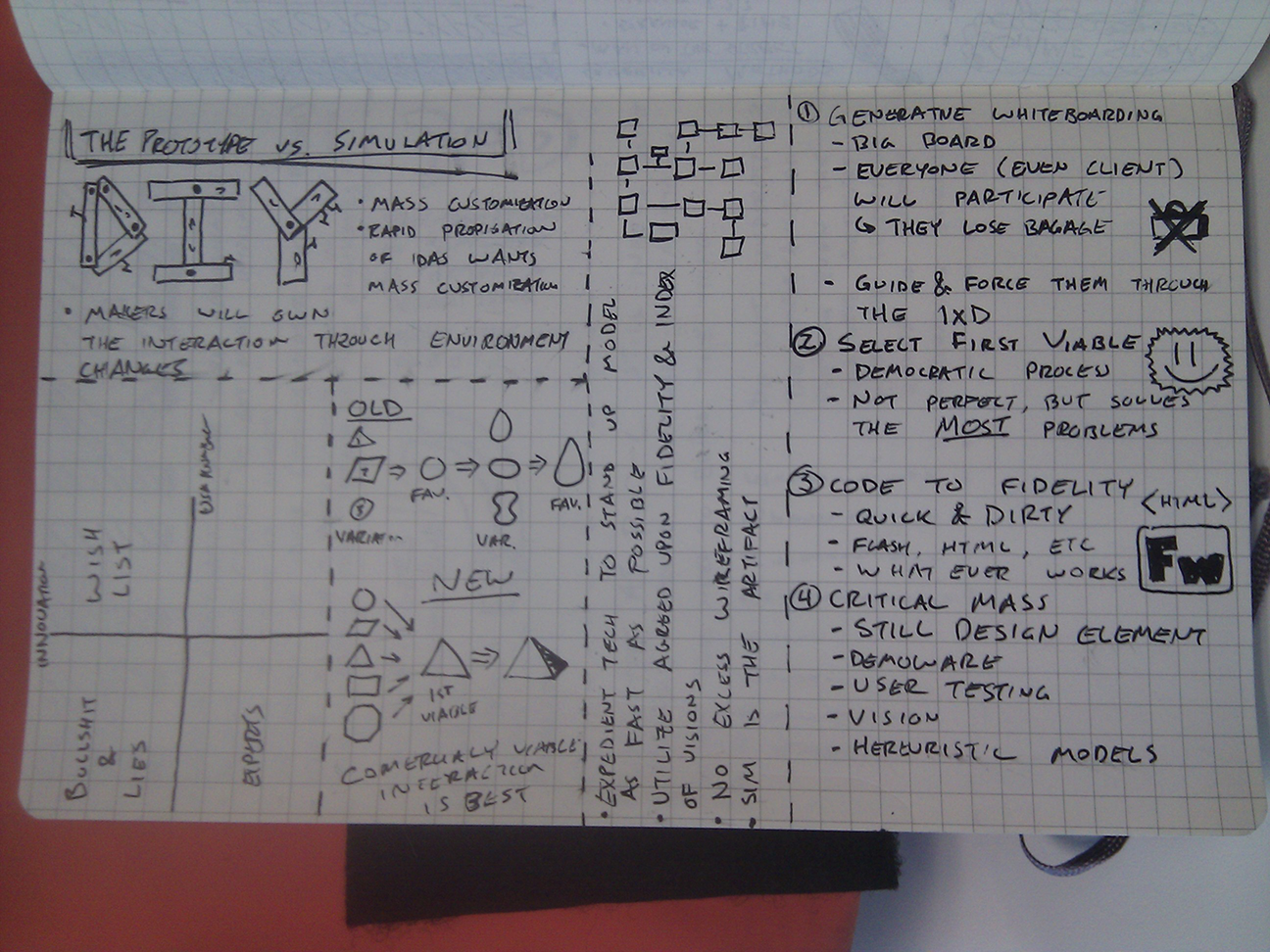
DIY has caused an influx of mass customization and rapid propogation of ideas wants massive customization (3-D printing technologies, open source software). Makers will start to own the interaction model through environmental changes. The old model is massive variation leading to a favorite construct, leading to slightly less variation, leading again to a favorite construct. [...]
Gamestorming! Use the 6/8/5 sketch method to rapidly get ideas out on paper without huge overhead. Does it pass the sniff test? Use feedback from sketches to influence design – people are more likely to give feedback on low-fi mockups. Iterate, sketch, and play with ideas to work the bad ideas out of your head. [...]
Focus Groups: These are often done in situ. Individual assignments given before the discussion can be used to produce better results and data. Small workshops are sufficient for the data you’ll need to collect. Site Visits are important! “What people do, what they say, and what they say they do; are all different things”- Margret [...]
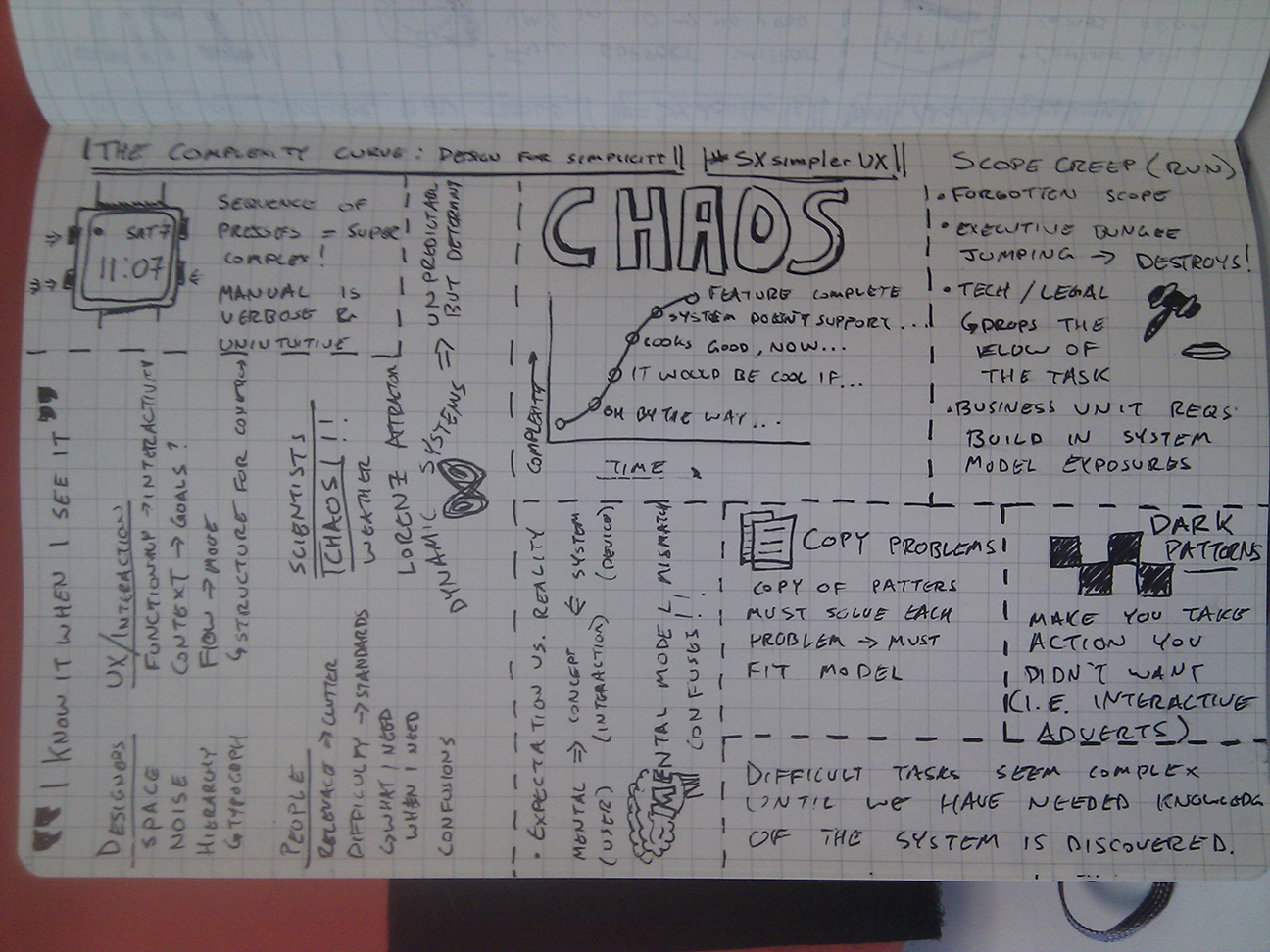
Watches and digital clocks point to a system that looks simple but is actually very complex. Only a few buttons, but presses, sequences, and the manual are all difficult to understand or remember. “I know it [simplicity] when I see it!” Designers see: Space (white space), Noise (visual cleanliness), and Hierarchy (typography) IXD see: Functionality [...]
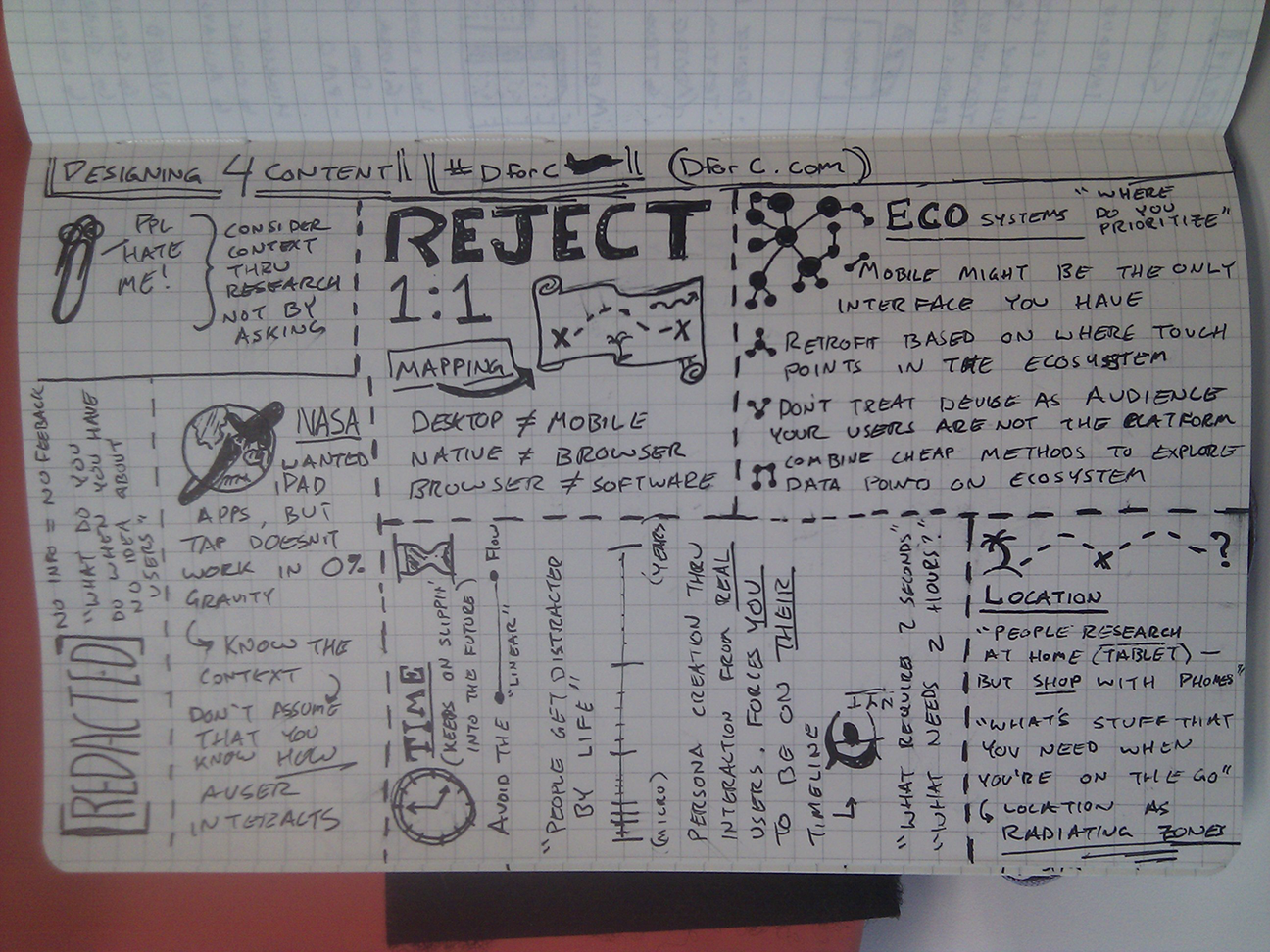
Consider context through research, it’s better than asking. The Model T was invented through research, Microsoft Clippy was invented through asking. Think about context in the environment for which you will be designing for. Touch for iPad is amazing, but in space nasa found that astronauts could not use touch the same way, physics was [...]
I was having an interesting conversation with Alex Jones the other day, remarking about the usability studies by Peter Steen Høgenhaug around the ‘link’ iconography in CMS software. Alex touched on this in his blog with Usability of the Link Icon and earlier with Replacing the Save Icon. It’s interesting when we encounter patterns in [...]